

Design Guidance
At Brisbane Acoustics, we don’t just offer specialist installation services,
we also have a suit of design solutions to support creating a personal
space for you and your clients.

Colour Selection
- Harmonize with Design Theme: Choose colors that complement the overall aesthetic of the space. For instance, neutral tones like greys, whites, and beiges can create a calm environment suitable for offices, while vibrant colors can energize spaces like schools or creative studios.
- Consider Brand Identity: If the space is commercial (e.g., offices, retail), integrate brand colors into the acoustic solutions for a cohesive look. This can enhance brand recognition and reinforce the company’s image.
- Mood and Functionality: Use colors strategically to influence the mood. Soft blues and greens can promote relaxation, while brighter colors can enhance energy and creativity.
Product Profiles
- Material Choices: Opt for a variety of materials that provide different acoustic benefits. For instance, felt, fabric, wood, and metal can all contribute to sound absorption and can be chosen based on durability and aesthetics.
- Shape and Design: Consider unique designs and profiles that can enhance both functionality and visual appeal. For example, baffles, wall panels, and ceiling tiles can be designed in geometric shapes to create artistic visual elements while serving acoustic purposes.

Assessment of Space Needs
- Understand the Purpose: Identify the primary use of the space (e.g., office, classroom, restaurant) to determine the required acoustic performance. Spaces with high noise levels may need more substantial solutions.
- Evaluate Acoustics: Conduct an acoustic assessment to understand noise issues. Identify areas with excess reverberation and pinpoint sound sources.
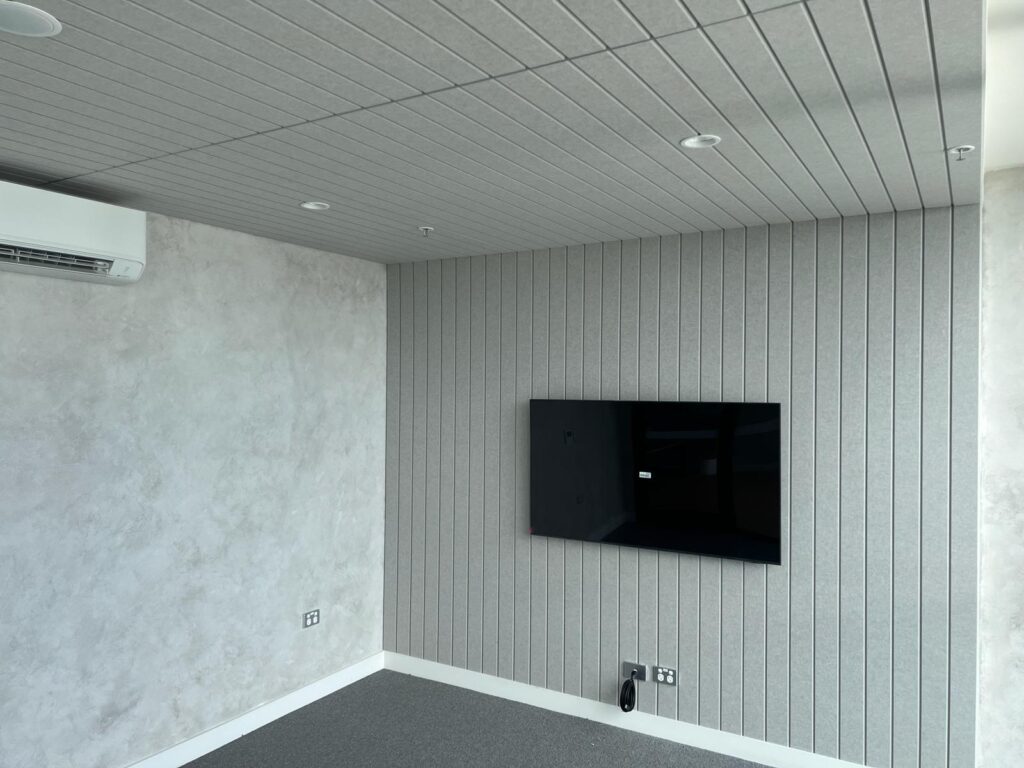
- Installation Flexibility: Choose products that offer flexible installation options. Panelised materials are dieal for spaces where services are to be installed, such as wall mounted TV’s and general power outlets (GPO’s).
Budgetary Alignment
- Determine Budget: Establish a clear budget range before selecting products. Ensure that you account for both initial and long-term costs, including installation and maintenance.
- Prioritize Needs: Focus on the most critical acoustic issues first (e.g., high-noise areas) to allocate funds effectively. Consider a phased approach if the budget is tight, integrating additional solutions as funds allow.
- Evaluate Cost-Effectiveness: Research options that provide high performance without compromising on design. Some manufacturers offer products that are not only visually appealing but also competitively priced.
